
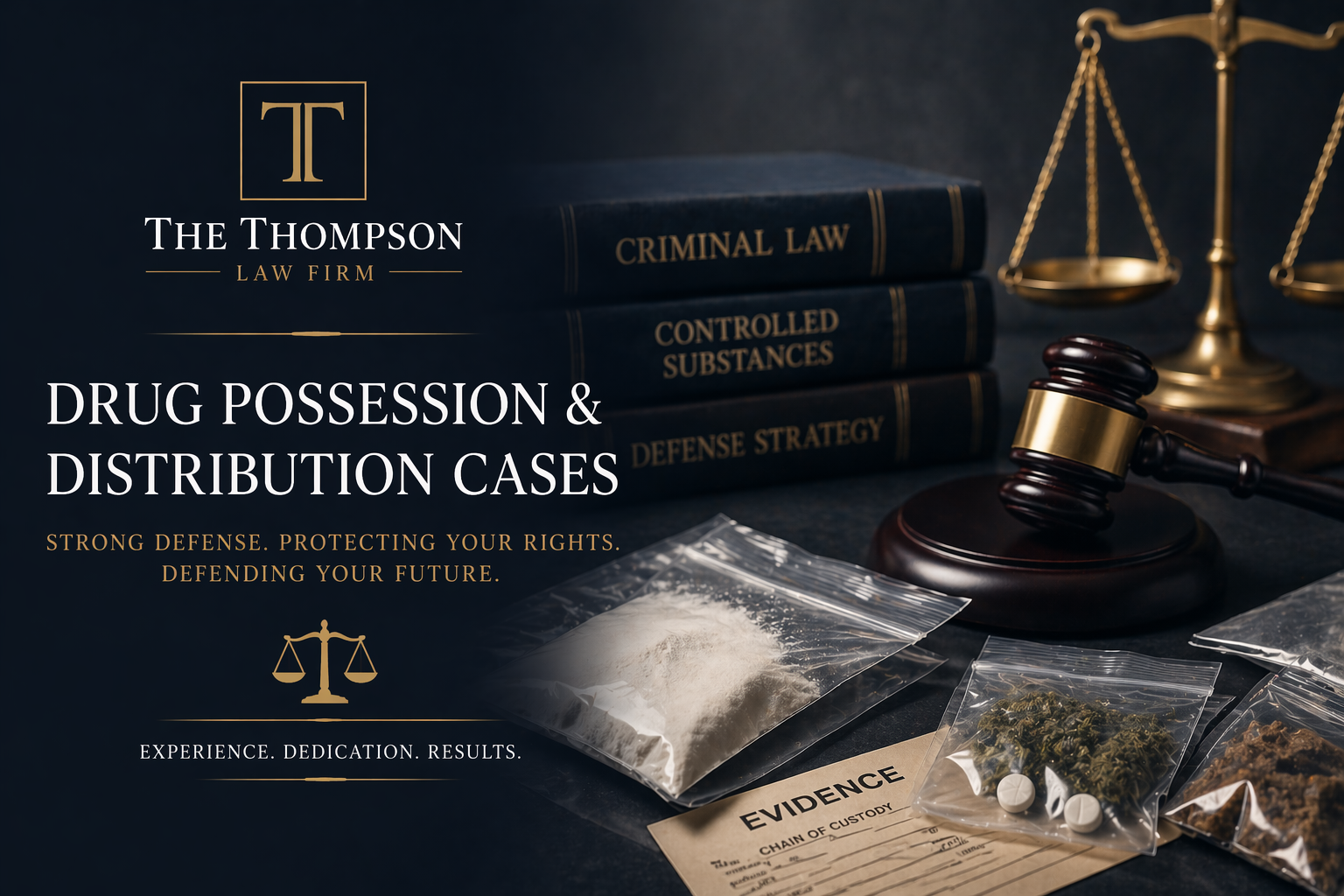
Drug possession and distribution charges are among the most serious criminal offenses a person can face. Whether you’re dealing with a small amount of a controlled substance or facing allegations of trafficking, the legal consequences can be life-changing. Understanding how these cases are handled—and what your rights are—can make a critical difference in the outcome.
Understanding Drug Possession vs. Distribution
While both offenses involve controlled substances, the law treats them very differently.
Drug Possession
Possession charges typically involve having a controlled substance for personal use. However, even simple possession can lead to:
- Fines and court costs
- Probation or jail time
- Mandatory drug education or rehabilitation programs
- A permanent criminal record
Drug Distribution
Distribution (or intent to distribute) is a more serious charge and may involve:
- Selling or delivering drugs
- Possessing large quantities that suggest intent to sell
- Packaging materials, scales, or large amounts of cash
Distribution charges often carry significantly harsher penalties, including felony convictions and long-term imprisonment.
Types of Controlled Substances
Drug charges vary depending on the type and classification of the substance. Controlled substances are generally categorized into schedules based on their potential for abuse and accepted medical use. These may include:
- Marijuana (in certain circumstances)
- Cocaine
- Heroin
- Methamphetamine
- Prescription medications without a valid prescription
Even prescription drugs can lead to charges if they are possessed or distributed unlawfully.
Legal Consequences in Georgia
Drug laws can vary by state, but in Georgia, penalties for possession and distribution are strict. Consequences may include:
- Misdemeanor or felony charges, depending on the substance and amount
- Significant fines
- Jail or prison time
- Driver’s license suspension
- Long-term impact on employment and housing opportunities
Repeat offenses or cases involving distribution near schools or involving minors can result in enhanced penalties.
Key Factors That Influence Drug Cases
Several factors can affect how a drug case is charged and prosecuted:
- Quantity of the substance
- Type of drug involved
- Location of the alleged offense
- Prior criminal history
- Presence of intent to distribute
These details often determine whether a case remains a misdemeanor or escalates to a felony.
Possible Defense Strategies
Every case is unique, but there are several common defense approaches used in drug-related cases:
- Unlawful Search and Seizure
If law enforcement violated your constitutional rights, evidence may be suppressed. - Lack of Knowledge or Possession
You may not have known the substance was present or illegal. - Improper Handling of Evidence
Mistakes in how evidence was collected or stored can weaken the case. - Entrapment
If law enforcement induced a crime that otherwise would not have occurred.
An experienced criminal defense attorney will carefully evaluate the details to build a strong defense.
The Importance of Acting Quickly
If you’re facing drug charges, timing matters. Early legal intervention can:
- Protect your rights during questioning and investigation
- Identify weaknesses in the prosecution’s case
- Potentially reduce charges or penalties
- Explore alternative sentencing options such as diversion programs
Long-Term Impact of Drug Charges
Beyond the immediate legal consequences, a drug conviction can affect nearly every area of your life:
- Employment opportunities
- Professional licensing
- Housing applications
- Educational opportunities
- Personal reputation
That’s why it’s essential to take these charges seriously from the very beginning.
Final Thoughts
Drug possession and distribution cases carry serious risks—but being charged does not mean you are without options. With the right legal strategy and experienced representation, it’s possible to challenge the charges, protect your rights, and work toward the best possible outcome.
If you or a loved one is facing drug-related charges, seeking legal guidance as early as possible can make a significant difference in your future.